

- The Core Infrastructure: Matter-over-Thread Smart Hubs
- Local AI Processing and Smarter Voice Assistants
- Smart Locks and Security Cameras Built for 2026
- Energy Management and Smart Power Solutions
- My Hands-On Experience: Building My Perfect 2026 Smart Home
The Core Infrastructure: Matter-over-Thread Smart Hubs
Choosing the right smart home hub isn't just about buying a cool gadget anymore; it's about building a rock-solid foundation for your entire house. In 2026, the game has shifted entirely to Matter-over-Thread. If you're still buying devices that rely on proprietary cloud bridges or sluggish Wi-Fi connections, you're setting yourself up for a frustrating experience. The newest hubs from Samsung, Apple, and Home Assistant act as local Thread Border Routers, which means your devices talk to each other directly without sending data up to a distant cloud server. This change makes your lights turn on instantly when you walk into a room, rather than lagging for several painful seconds. Let's talk about why Thread is the gold standard right now. It is a self-healing mesh network, so if one smart plug gets unplugged, the other devices simply reroute their signals through another path to stay connected. The standout hubs this year don't just support Matter; they have powerful enough processors to handle local automation routines even if your internet connection goes completely down.
A simplified network diagram showing how Matter-over-Thread devices connect to each other and to a central hub acting as a Thread Border Router, bypassing the cloud for local control.
Local AI Processing and Smarter Voice Assistants
Moving past basic connectivity, the big leap we've seen recently is the shift away from frustratingly dumb voice assistants. We all know the pain of asking a speaker to turn off the kitchen light only to hear "I didn't understand that" or "Please try again later." The latest generation of smart speakers and hubs use small, highly optimized language models that run directly on the device hardware inside your home. They don't need to send your voice recordings to a cloud server to figure out what you want, which is a massive win for privacy and speed. These local AI systems learn your daily routines without you having to program complicated schedules manually. For example, if you always dim the living room lights and turn on the media center around 8 PM on weekdays, your system will start suggesting these routines or automatically executing them based on your occupancy sensors. It feels less like a collection of disjointed gadgets and more like an assistant that actually understands how you live. The voice control is fluid, conversational, and incredibly fast because there is zero round-trip latency to a cloud server.Smart Locks and Security Cameras Built for 2026
Home security has also taken a massive leap forward, particularly with smart locks and cameras. The best smart locks of 2026 have ditched clunky physical keypads and unreliable fingerprint scanners in favor of Ultra-Wideband (UWB) technology. This is the same technology that powers precise item tracking on your phone. When you walk up to your front door with your phone in your pocket or your smart watch on your wrist, the door unlocks automatically exactly as you step onto the doormat. No more fumbling with heavy grocery bags or waiting for a mobile app to load.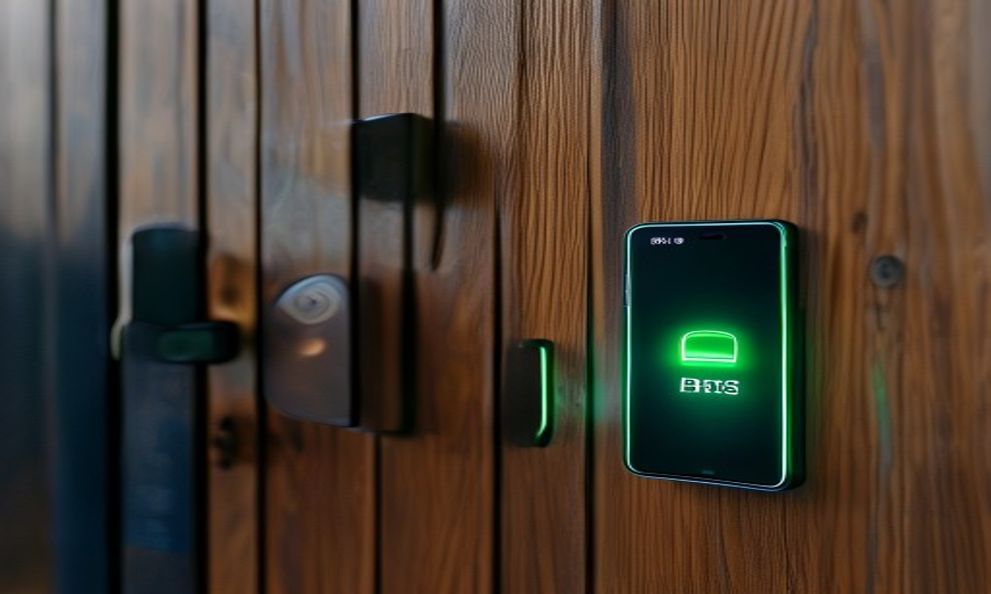
A close-up shot of a modern, sleek smart lock on a wooden door, showing a smartphone glowing nearby in someone's pocket as the lock's LED indicator turns green to show a hands-free UWB unlock.
Energy Management and Smart Power Solutions
With energy costs rising, smart home technology has evolved to help manage power consumption actively. We're seeing incredibly smart circuit breakers and smart plugs that monitor the power draw of every appliance in real time. These systems integrate directly with dynamic utility pricing to run high-energy appliances, like your dishwasher or electric vehicle charger, when electricity rates are at their lowest.Pro-Tip: Set up your smart energy monitor to automatically shut off power to "vampire" appliances—like older TVs and gaming consoles in standby mode—during your sleeping hours. It can easily shave 5% to 10% off your monthly electric bill without any effort on your part.By combining smart plugs with dynamic scheduling, you can turn your home into an efficient, self-regulating ecosystem. It's no longer just about convenience; it's about making your home cheaper to run and more sustainable. You can set thresholds so that if your home exceeds a certain wattage, non-essential devices temporarily pause until the spike passes.
My Hands-On Experience: Building My Perfect 2026 Smart Home
Honestly, I've tried this myself over the last year in my own home, transitioning from an older, cloud-dependent setup to a modern, local-first Matter-over-Thread network. I swapped out my old Wi-Fi smart plugs for Thread-enabled ones and moved my automations over to a local Home Assistant setup. The difference was night and day. Previously, when I used my old smart button to turn off my bedside lamp, there was a noticeable, sluggish delay. Sometimes it didn't even register. Now, with Thread, the response is instantaneous—it feels as fast as a traditional, physical wall switch.
A screenshot of a real-time smart home dashboard displaying local device connections, instant response times, and zero latency metrics for Thread-connected devices.
Frequently Asked Questions
What is the main benefit of Matter-over-Thread?Matter is a unifying software standard that allows devices from different brands (like Apple, Google, and Samsung) to work together seamlessly. Thread is the low-power wireless mesh network that connects them. Together, they make your smart home faster, more reliable, and completely local, meaning your devices don't have to rely on the cloud to communicate.
Do I need a high-speed internet connection for these 2026 smart devices?While you need an internet connection for initial setup, remote access when you're away, and software updates, the beauty of modern local-first devices is that they will continue to work perfectly fine within your home even if your internet connection goes completely down.
Are local AI smart assistants safe for my privacy?Yes, they are much safer than older cloud-based assistants. Because the language processing is done locally on the smart hub's hardware, your voice data and room activity logs never leave your physical house, keeping your private life private.
Can I mix and match different brands of smart home gear?Absolutely. As long as the devices support the Matter standard, you can buy a smart plug from one brand, a sensor from another, and control them all using your preferred app or voice assistant without worrying about compatibility issues.
Need Digital Solutions?
Looking for business automation, a stunning website, or a mobile app? Let's have a chat with our team. We're ready to bring your ideas to life:
- Bots & IoT (Automated systems to streamline your workflow)
- Web Development (Landing pages, Company Profiles, or E-commerce)
- Mobile Apps (User-friendly Android & iOS applications)
Free consultation via WhatsApp: 082272073765
Posting Komentar untuk "The Ultimate Guide to the Best Smart Home Devices for 2026"